

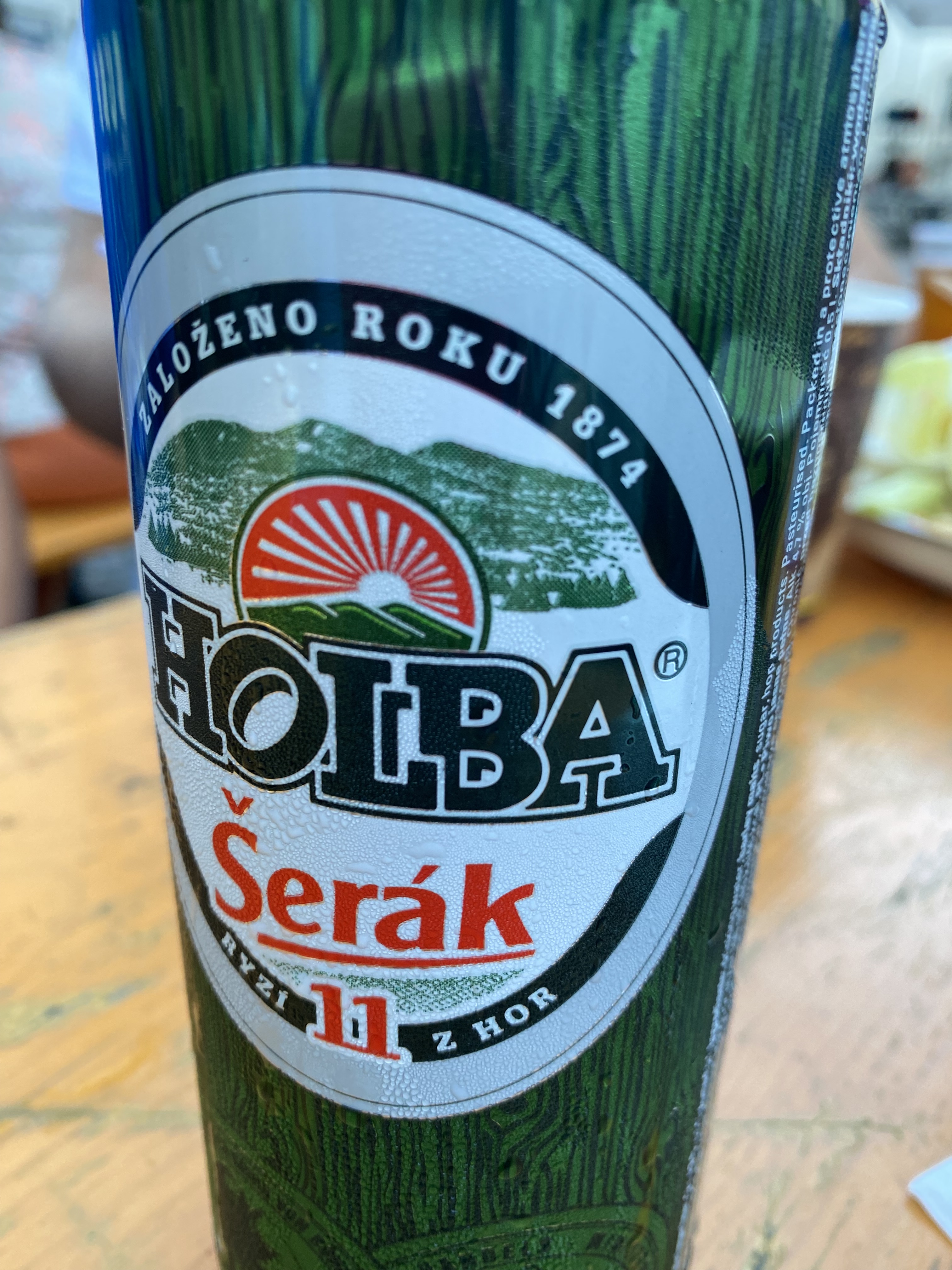
Is it possible to LEARN FROM CONTEMPORARY HISTORY FOR PEACE? I would say yes, if we don’t embrace cultural snobbism, self-righteousness, unforgiveness, greed and avarice. To learn from contemporary history we can also add friendliness. We can include fundraising for a good cause, open-mindedness, music, singing, smiling, chatting, and sharing food and drinking a little glass of HOLBA Serak beer…




RECIPE: MARUSKA’S “KOLACHES”
500 gr. (U.S. 2 1/2 cups or 17.6 oz.) all pupse flour, 500 gr. (U.S. 2 1/2 cups or 17.6 oz.) semi coarse flour (or a mixture of all purpose and cake flour), 200 gr. ( U.S.1 cup or 7.05 oz.) granulated sugar, 250 gr. (U.S. 1 cup + 1/8 cup or 8.81 oz.) fat (“Hera” margarine or butter), 5 Tbs. oil, 1-3 egg yolks, 70 gr. (U.S. 2 Tbsp.) fresh yeast (or 2 envelopes of dry yeast [7 gr. each], 1 pinch salt, 300 ml. ( 1 1/4 cup) 2 % milk.
In the luke-warm milk, crumble the yeast with a tsp. sugar and 1 Tbsp. flour. Set aside for about 10-15 minutes until it makes bubbles. In a large mixing bowl, mix flour, sugar salt, and the egg yolks. Add the softened fat, the remaining milk and the risen yeast mixture. Either by hand or with a hand mixer with a dough hook, knead until obtaining a smooth and elastic dough. Cover the bowl with a clean towel and let the dough rise for 1-1 1/2 hours or until it has visibly risen and doubled in volume. Preheat the oven to 180 degrees Celsius (350 degrees F) . Shape the “kolaches” by tearing small balls of dough of the size of a gold ball and flatten them while creating a indentation in the middle. Top each “kolache” in its the indentation with plum jam (“povidla”). To fill the indentations, instead of jam, you may use either sweetened ricotta or cottage cheese (“tvaroh”) or poppy seed paste (“makova pasta”). For a final touch before placing in the warm oven: Brush the edges of each “kolache” with beaten egg and sprinkle each pastry with a “streusel” (butter, flour, sugar crumb mix). Bake for 15-20 minutes until the “kolaches” are shiny and golden brown.
SO WHAT ABOUT ABOUT LEARNING FROM CONTEMPORARY HISTORY FOR PEACE?
This Italian Marco and Czech Dolni Dobrouc history for peace begins in 1914. Several Marco inhabitants were evacuated from the border lands. They were sent to Austrian Hungarian Bohemia, Moravia, and Czechoslovakia. Marco Austrian Hungarian-Tirolean inhabitants moved away from home on foot, by train, and by carriages. They carried a small suitcase, a blanket, and food for five days. They also carried a heavy heart to an unknown location. They left behind their animals and their silk worms. They crossed miles and miles of unknown land. Eventually, they reached the village of Dolni Dobrouc. There, locals also dealt with problems from an ongoing European World War. However, more than once history as it evolves from traumatic events and suffering brings forth also constructive and joyful experiences. Not all locals were grumpy and mean; there were many who were welcoming and friendly. Marco’s refugees worked with locals in the fields. They tried to keep up their routine as best as they could. They married and bore children. They tasted and cooked different foods. They learned to speak the foreign language. Finally, they were allowed to return to a semi destroyed old “Italian” neighborhood. I believe they did not forget, however, they forgave and moved on with their new “Italian” lives.


As time passed and history books were printed describing WWI and WWII, Marco and Dolni Dobrouc’s inhabitants did not forget. On April 20, 1996, Dolni Dobrouc’s Vice Mayor Vlastimil Mlynar sent a letter to the citizens of Marco of the jurisdiction of Rovereto. The letter described the story of Marco’s WWI refugees. It invited those who were still alive to meet and celebrate. Bruna Liotto, President of the Association of Marco’s Retirees answered in the name of everyone. Curiosity and desire of retracing history initiated a “Twin-Friendship” movement. Lino and Marco Setti, Lino and Giovanna Plotegher and their son Carlo visited the Czech village almost 1000 kilometers away from Marco. Some old former Trentino Alpini soldiers remembered the song “Sui monti Scarpazi”…
“Quando fui sui monti Scarpazi, “miserere” sentivo cantar, t’ho cercato fra il vento e i crepazi, ma una voce soltanto ho trova’…O mio sposo eri andato soldato per difendere l’imperator, ma la morte quassu’ hai trovato e mai piu’ non potrai ritornar. Maledeta la sia questa guera che mi ha dato si tanto dolor, il tuo sangue hai donato a la tera, hai distrutto la tua gioventu.’ Io vorrei scavarmi una fossa, sepelirmi vorei da me, per poter colocar le mie ossa solo un palmo distante da te…”
Translation: “When I was up throughout the Carpathian mountains I heard “miserere” singing, I looked for you but found only wind and crevices…Oh my spouse, you were a soldier to defend the emperor, but up there you found only death and will never return. Cursed be this war which gave me such pain; you gave blood to this earth, you destroyed your youth. I wish I could dig a grave to bury my bones only a few inches away from you…”
(Song dating back to 1917 when a group of Austrian-Trentino soldiers were sent to fight as far as Romania in a region of the Carpathian mountains [Scarpazi is an Italian-Trentino distortion of the word “Carpazi” meaning Carpathian mountains]).

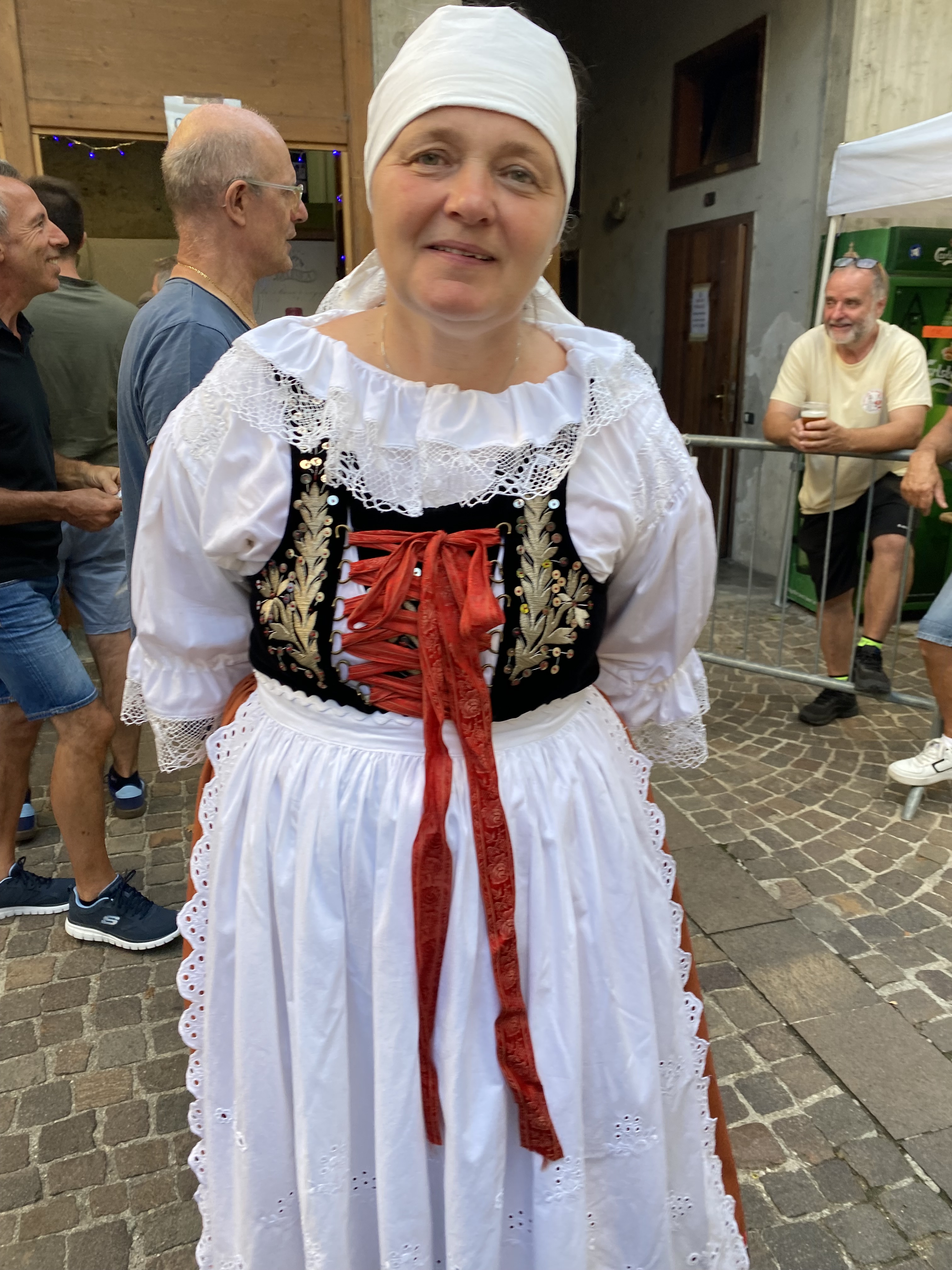
More visits from Dolni Dobrouc followed in 1998 and, in 1999 in Rovereto, a Peace Soccer Tournament took place in Rovereto, followed by an Alpini dedication of a monument to all those fallen during both wars. In 2000, a new visit to Dolni Dobrouc uncovered a tombstone dedicated to a 4-month-old child. The child died in 1918 shortly before Marco’s refugees returned home. In 2001 a visit of citizens of Dolni Dobrouc to Marco preceded a visit to Dolni Dobrouc of the Marco Fire Brigade. In 2002 Czech scouts and both town’s Mayors celebrated Peace and Friendship and a visit to the brand new MART Art Center of Rovereto. In 2003 a group of young people of both townships stood quiet listening to Rovereto Bell of Peace. Since then many events and visits between Dolni Dobrouc and Marco locals followed. And a couple of days ago, on July 25, 26, and 27, an event took place in Marco. It included a fundraiser to help refurbish the old Saint Nikolas Church of Dolni Dobrouc. There was a lot of Czech food and Czech beer. Italian juices, wine, and “grappa” were served. People enjoyed fiddle, guitar, and accordion playing. There was dancing, singing, chatting, and speaking about history and peace.

ABOUT KIELBASA SAUSAGE, ALSO KNOWN AS KOLBASZ: It is a dark brown reddish sausage with Polish origin. It is sold either fresh or smoked. It is usually made from pork, beef, turkey, lamb, chicken or veal. Each of these sausages prepared with different types of meat varie according to the area where they are made. Kolbasz is a Hungarian word which means sausage. Hungarians, for example, are used to various and different smoked sausages: the Gyulai, the Kolbasz, the Csabai Kolbasz, the Hasi Kolbasz, the Cserkesz Kolbasz, the Letscho Kolbasz (spiced with paprika, garlic, pepper and marjoram) and the Debreceni Kolbasz which is named after the Hungarian city of Debrecen.
MORE ABOUT KOLACHES? Those are Czech sweet dough disks. They can be either small or large. The disks are usually indented and filled with jam, poppy seeds, or sweetened cottage cheese. The filling I tasted during the Marco- Dolni Dobrouce event was made from plums or prunes. My Austrian Oma called that jam “powidl.” Usually Kolaches are sprinkled with sweet crumb topping. For the Kolaches filled with poppy seeds, the poppy seeds are finely ground with a special Czech made poppy grinder.
DID YOU KNOW? Many Austro Hungarians, Bohemians, and Moravians moved to the United States before, during, and after WWI. They especially settled in the Midwest, Great Lakes, and Pennsylvania areas. With them they took their Kielbasa and Kolache know how. They also brought their “powidl,” mustard, sausage making skills. They initiated also a beer brewing legacy which is still thriving today in many states of the United States. Today, you can easily find American made Kielbasa sausages with mustard. “Powidl” jam filled kolaches are also available in many American German, Czech, Bohemian or Polish specialty stores, butcher shops, and bakeries.
THANK YOU DOMENICO NAVE, SIMONETTA PEROTTO AND MARIANO VERONESI FOR ALLOWING ME TO LEARN ABOUT THIS PIECE OF CONTEMPORARY HISTORY! THANK YOU ALOIS POSPISIL, FRANTISEK AND FATHER PAVEL FOR THE WONDERFUL MUSIC MAKING! THANK YOU MRS. RADKA FOR YOUR FRIENDLINESS AND YOUR ITALIAN LANGUAGE SKILLS. THANK YOU TO ALL THE WONDERFUL COOKS! THANK YOU TO THE BEER DISPENSERS AND TO THE CLEANERS! GRAZIE! DEKUJU!
THANK YOU ALSO TO ALL 2009 ROVERETO, MARCO, AND DOLNI DOBRUCE AUTHORITIES, FOR HAVING FACILITATED THE PUBLICATION OF A PIECE OF PRINTED HISTORY FOR PEACE!

THANK YOU ALSO TO (IN ALPHABETICAL ORDER): FIKOTOVA MARTINA, GATTI FULVIA, LIOTTO BRUNA, MODENA GUIDO, MODENA LUCA, PEROTTONI DARIO, PEROTTONI MAURIZIO, RASERA PROF. FABRIZIO, SALVETTI OSVALDO, SETTI LEO, SETTI LINO, TOSS RENATO, VERONESI CORRADO.
DOCUMENTS USED IN THIS CONTEMPORARY HISTORY BOOK CAME FROM: THE ARCHIVIO ARCIVESCOVILE DI TRENTO, THE BIBLIOTECA CIRCOSCRIZIONALE DI MARCO, THE BIBLIOTECA CIVICA DI ROVERETO, THE MUSEO DELLA GUERRA DI ROVERETO AND FROM THE ARCHIVE OF DOLNI DOBROUCE’S TOWNSHIP IN THE “REPUBLICA CECA” –
THE ABOVE DEPICTED BOOK WAS INTRODUCED IN 2009 BY THE FORMER MAYOR OF ROVERETO PROF. GUGLIELMO VALDUGA AND THE 2009 PRESIDENT OF MARCO’S DISTRICT MR. GUIDO MODENA AND PRINTED IN SEPTEMBER 2009 by LA GRAFICA S.R.L. MORI (TN).
 CULINARY ROOTS & RECIPES™