
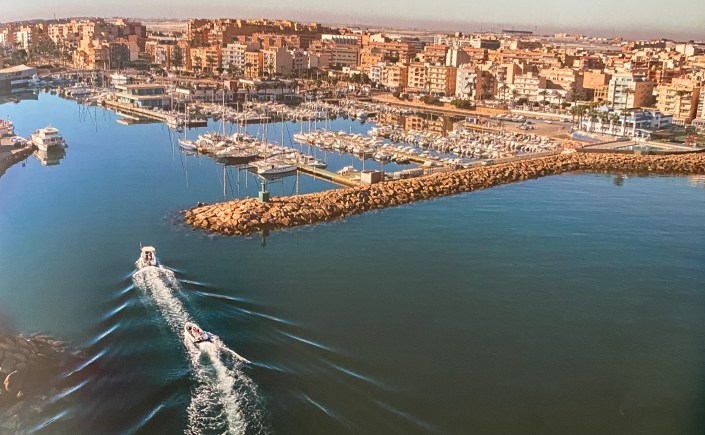
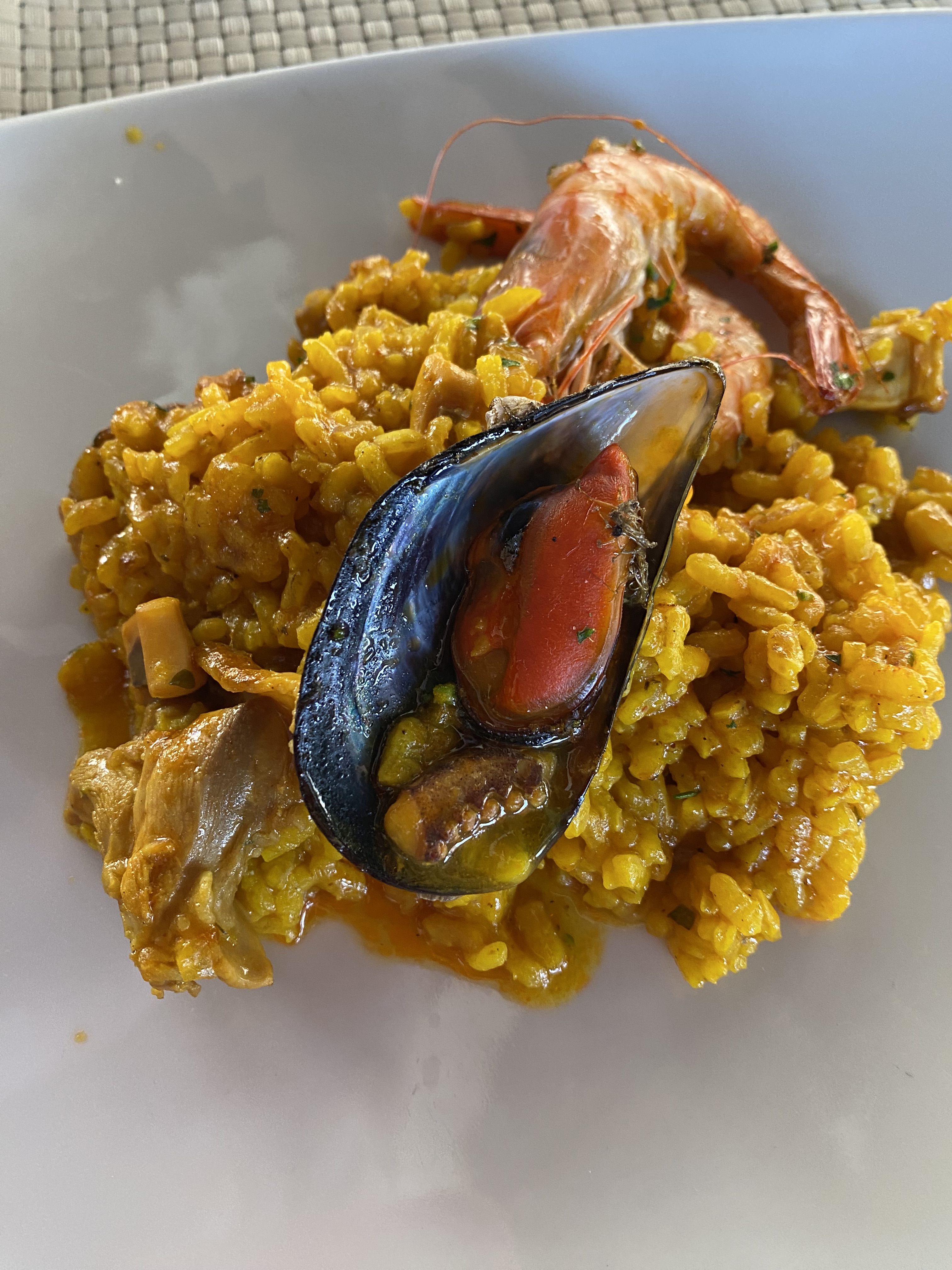
If you dream of white beaches and warm weather, book yourself into a place in Aguadulce. There enjoy good tostadas, tapas, gaspachos, sangrias, paella, or migas and bacalao frito. Relax on lounge chairs covered by straw sun umbrellas. Then, stroll through alleys flanked by palm trees to the Ciringuito beach cabanas. In one of them, Casa Nostra, cook Rufino prepares his paella. He serves it in a traditional Moorish “tagine” clay pot. Rufino can also prepare a special fried fish-seafood platters.


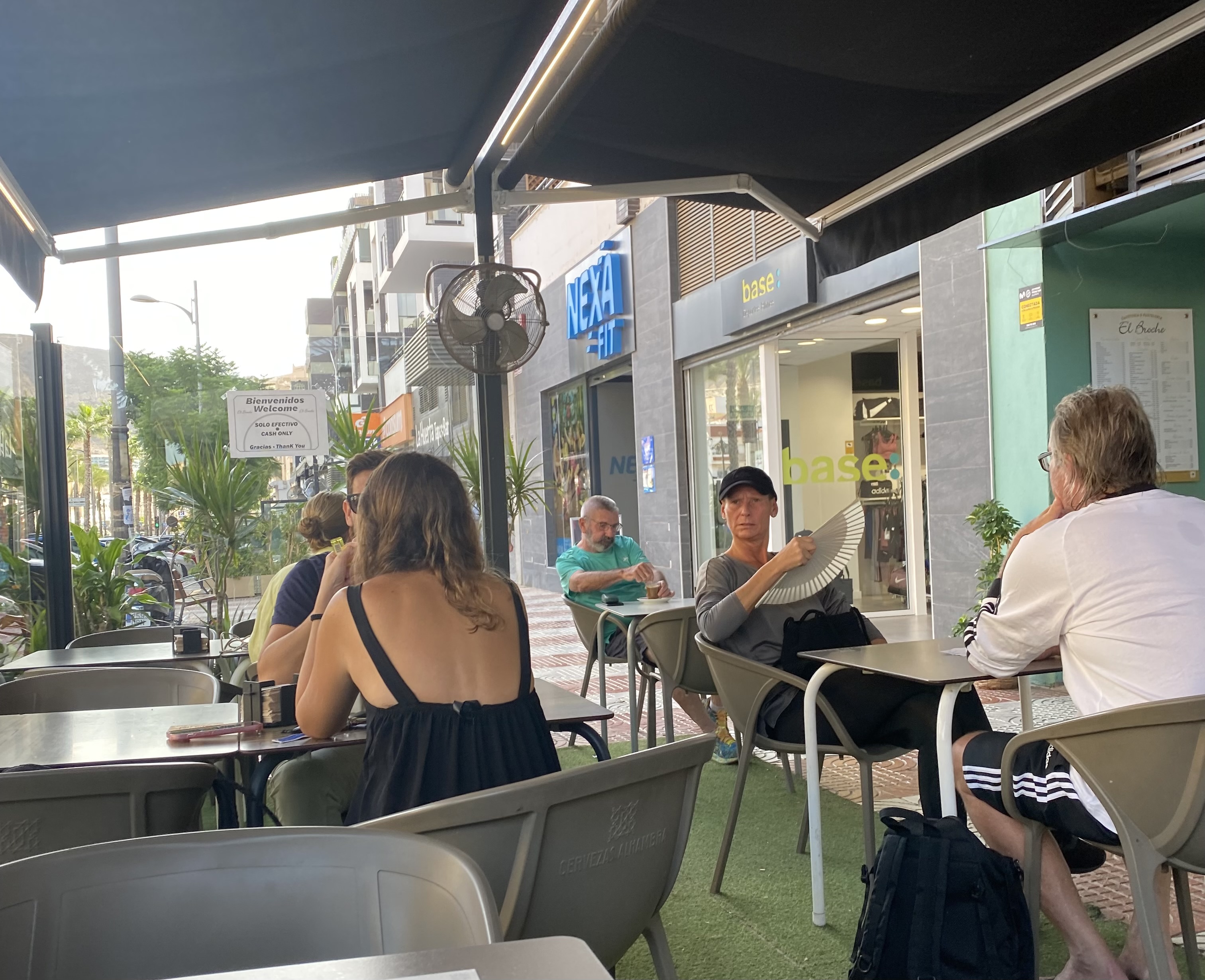
Walk along Avenida Carlos III. Enter a bar or a cafeteria for cafe con leche and the local breakfast tostada. If you need groceries, shop at well-supplied supermarkets. In case you find yourself still full of afternoon-evening energy: experience Aguadulce’s safe movida life.



RECIPE: AGUADULCE CIRINGUITO’S RUFINO’S PAELLA
“La paella lleva un fumet de pescado que seria el caldo depues sofrito de pimientos y tomate y lo mas importante marisco y azafran… el caldo o fumet se ace con las cabezas de langostinos y cabezas y espinas de pescado…el sufrito o base con pimientos, ajo perejil y tomate rallado y aceite de oliva…”
Paella is the name of a broad shallow pan: paella or “paellera.” The name can also refer to a heat resistant clay pan. The specialty was originally created in the Spanish Valencia region. Important ingredients for a good paella include Spanish Bomba rice. This rice is a short grain rice similar to Italian risotto rice. Other key ingredients are saffron and olive oil. To rice, saffron, olive oil, fish and seafood, traditional paellas usually feature white meats. These meats are often chicken or rabbit. While Italian risotto requires stirring, paella should never be stirred once all the ingredients have been mixed together.
Serves 4-6
1/2 cup olive oil, 2 lbs. boneless chicken (cut into bite size pieces), 1 medium sized onion (peeled, and chopped), 3 ripe tomatoes (peeled, seeded or whole peeled canned tomatoes, chopped), 1-2 cloves garlic (peeled and minced), 3 fresh stemless sprigs of parsley (minced), 1 lb. paella rice, 12 fresh scrubbed mussels, 1 lb. deveined peeled raw shrimps (preferably with tails on), 1 Tbsp sweet paprika and 6-8 threads of saffron, crumbled (or 1 Tbsp powdered saffron) added to 4-5 cups of chicken stock or fish stock.
In the large paella pan or a shallow skillet, heat on medium heat 1/2 cup olive oil. Add and brown the chicken pieces. As the chicken pieces are done, remove and set them aside while keeping the oil in the pan. Sauté the onion, the tomatoes, and the garlic. Also, add the mussels and the shrimps. Include the paprika and the minced parsley. Continue cooking all of these for about 30 minutes. Season with salt and freshly ground pepper; add the saffron-chicken stock and simmer for about 10 minutes. Add the rice and stir only once. Cook uncovered until the rice sees done, making sure all ingredients are well, distributed in the pan; WITHOUT STIRRING.
AGUADULCE AND ROQUETAS DE MAR
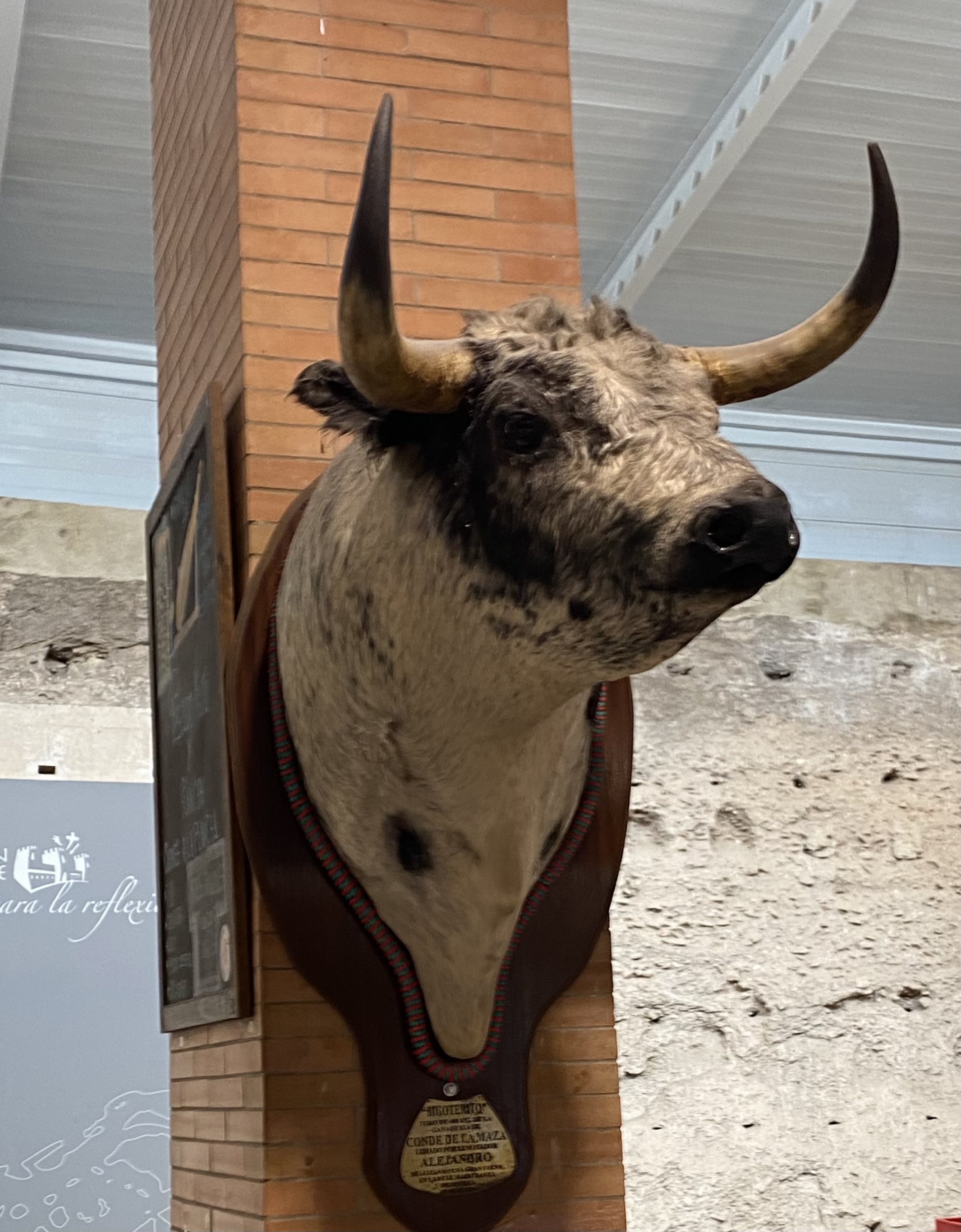
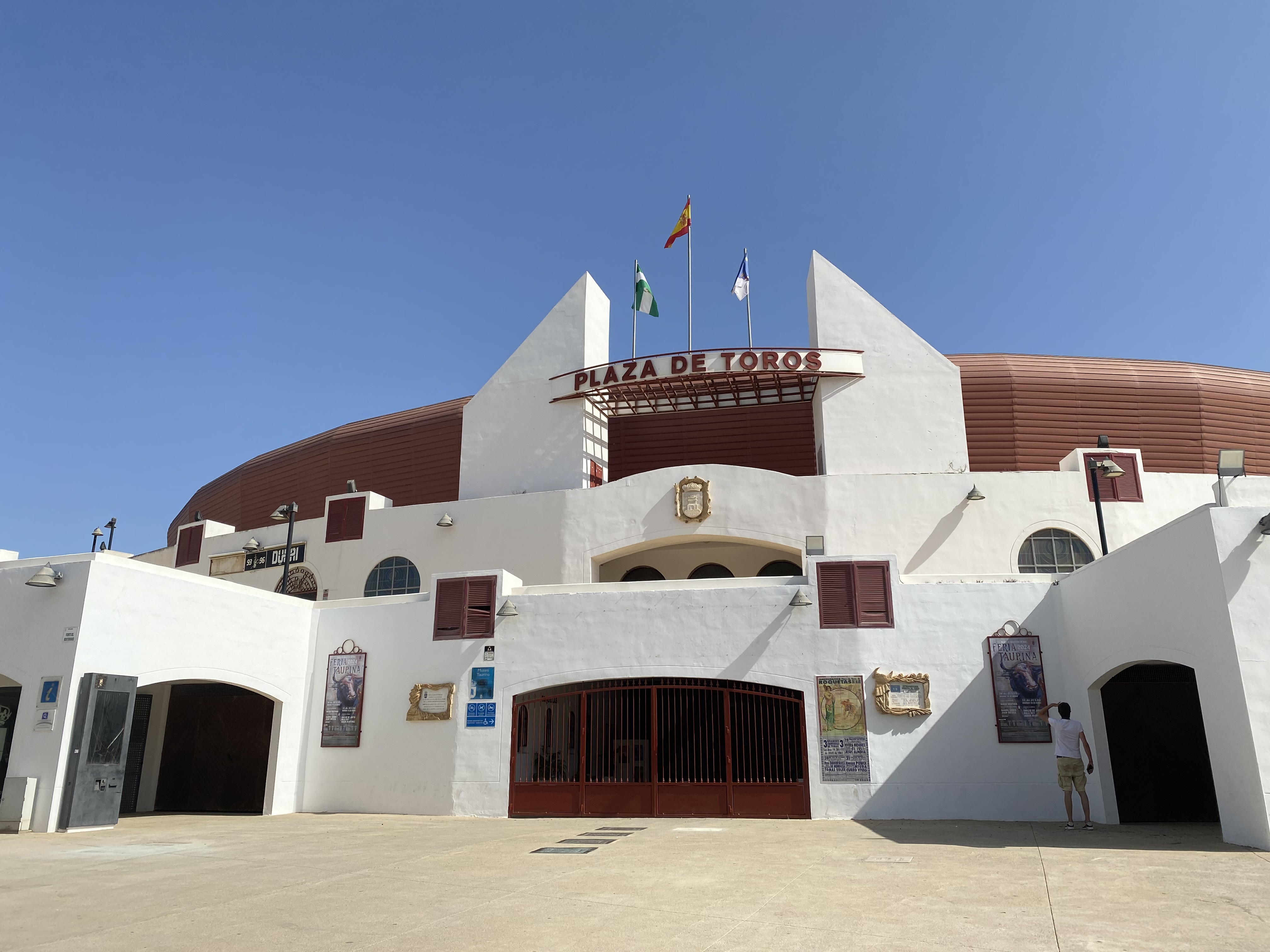
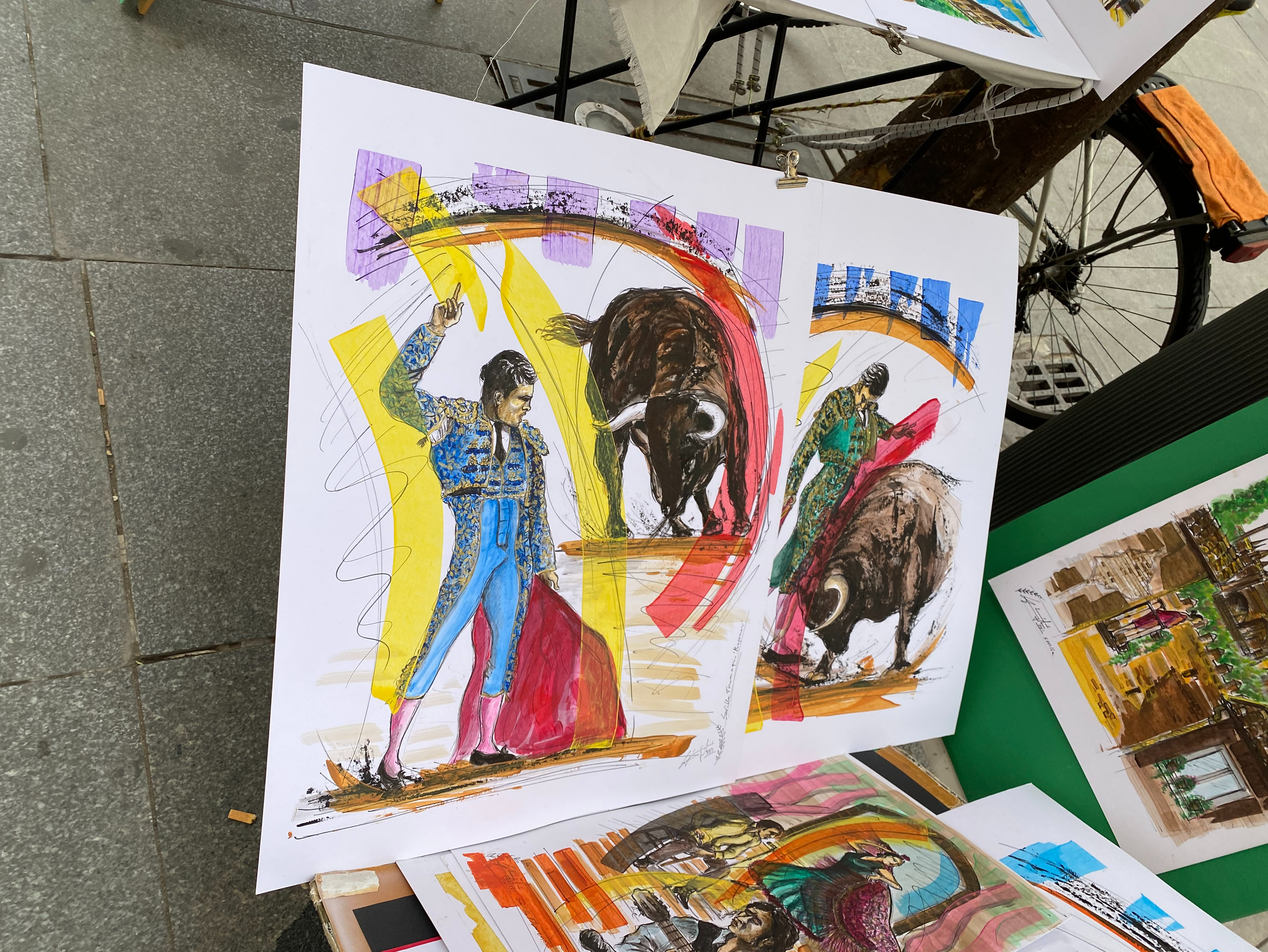
Today Aguadulce and Roquetas de Mar belong to one same municipality. They are both located in the province of Almeria, part of the autonomous region of Andalusia. A region located in the extreme south of the Iberian Peninsula in southwestern Europe. The province includes eight provinces: Almeria, Cadiz, Cordoba, Granada, Huelva, Jaen, Malaga, and Seville. Its capital city is Seville. The Spanish beach resort town with marina-commercial port is located 14 kilometers from Almeria and its airport. You can reach it on a very well kept highway, by car, bus, or taxi. Aguadulce started out as a fast growing popular beach resort town. Roquetas de Mar was once a fishing town. It is known since the 17th century for having defended the area from Moorish and pirate attacks. Both town have grown to be a large community. Roquetas de Mar seems almost melted into Aguadulce. Like Aguadulce, Roquetas de Mar has long white beaches, palm trees, and lush vegetation in parks. It offers hotels, coffee’ shops, and tapa places. There are also modern shopping centers, weekly street markets, a theater, and a corrida place.




ANDALUSIA’S CAPITAL SEVILLE AND ITS MELTING POT CUISINE
The name Andalusia derives from the Arabic word AL-ANDALUS. The name might have originated from a term used by ancient Iberian tribes and dates back to 716 A.D. when the Muslim Government issued coins written in Latin and Arabic using the term Al – Andalus. Many people have influenced the region’s history, culture, and cuisine. These ancient people included the Vandals, the Visigoths, the Byzantines, the Greeks, the Berbers, the Arabs, the Jews, the Romanis, and the Castilians.
Many multiethnic ingredients characterize today’s modern Andalusian and Spanish cuisine. A cuisine which includes foods and ways of cooking introduced by invaders and by the Muslims. In 844 also Vikings came to Seville. After sacking the city they were defeated by the Arabs. Muslim influence grew especially prominent during the Golden Age of Islam when Cordoba surpassed Constantinople and Rome. This was between the 8th and 14th century. Olive trees, rice, and citrus fruits were a few contributions brought by the Arabs. Other contributions include hard wheat, watermelons, eggplants, spinach, bananas, almonds and sugar cane. Briefly before Christopher Columbus’ first voyage to America in 1492 the Moors were pushed out from Spain. With the Spanish discovery of the Americas, Andalusia and Spanish cuisine gained new ingredients, such as tomatoes, chilies, pumpkins, potatoes, corn, allspice, vanilla, and chocolate.



SEVILLE – EL MERCADO Y EL BARRIO DE TRIANA
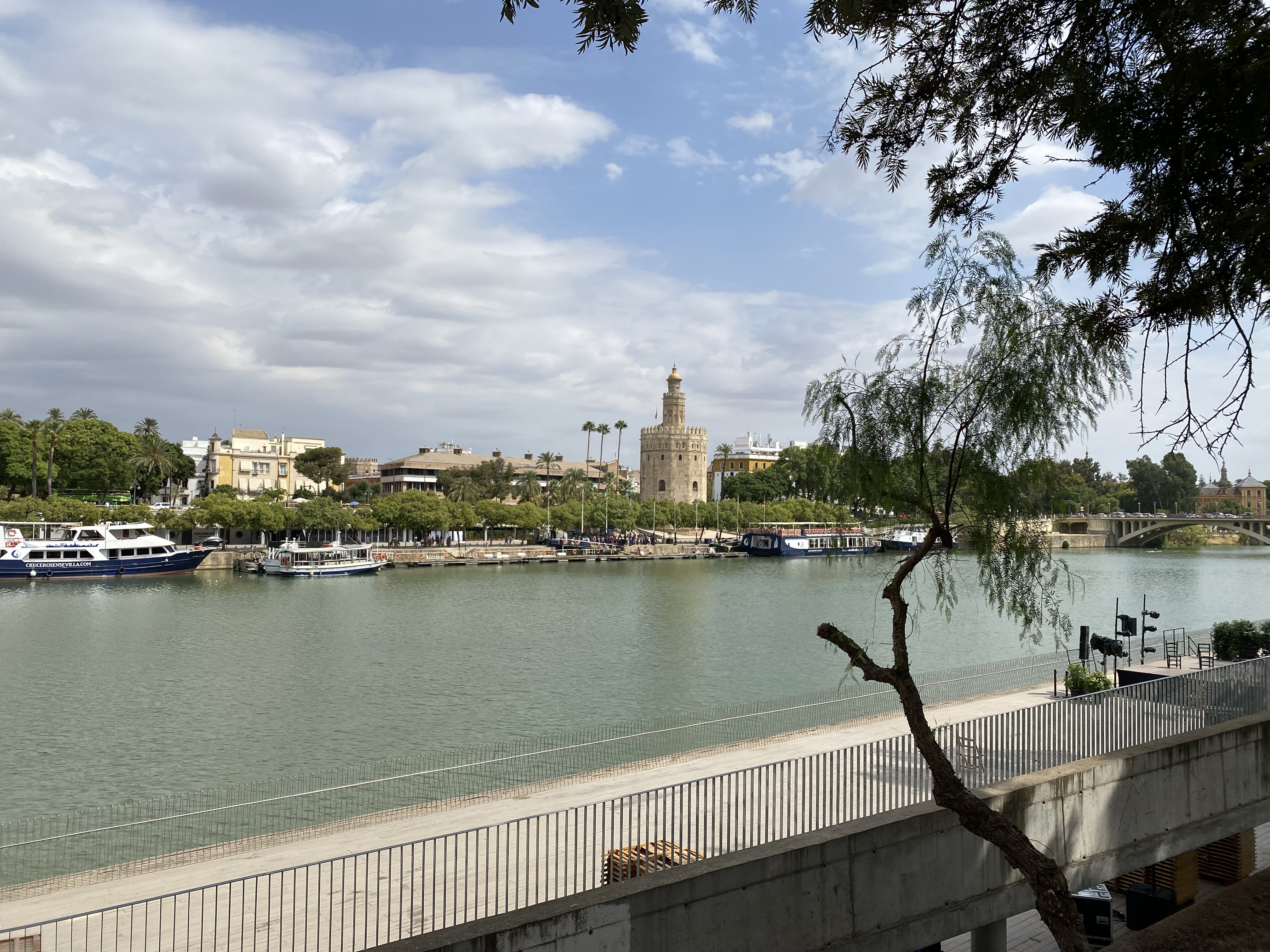
Andalusia’s modern capital built along and between the Guadalquivir has 108 neighborhoods called Barrios. Visit first the center of town with its Arabic style tiled buildings. The Cathedral incorporates parts of the city’s former main mosque and the claimed burial places of Christopher Columbus. Explore the historic Archivio de Indias with its ancient documents. To understand the multiethnic history of the city, visit the Juderia, the ancient Jewish quarter. Then explore the Barrio de Triana with its covered market just over the bridge crossing the big river. After the Columbian exploration of the New World, Seville became the headquarter city of the Casa de Contratacion. The “Casa” served as the commercial hub for everything that came from America. It also provided everything New Spain needed for its Spanish colonists. To bring in goods required entering the port of Seville by sailing up the Guadalquivir River for about 50 miles and unloading in proximity of what is today called la Torre de Oro (the Golden Tower). Across the tower and across the river is the thriving Mercado de Triana.


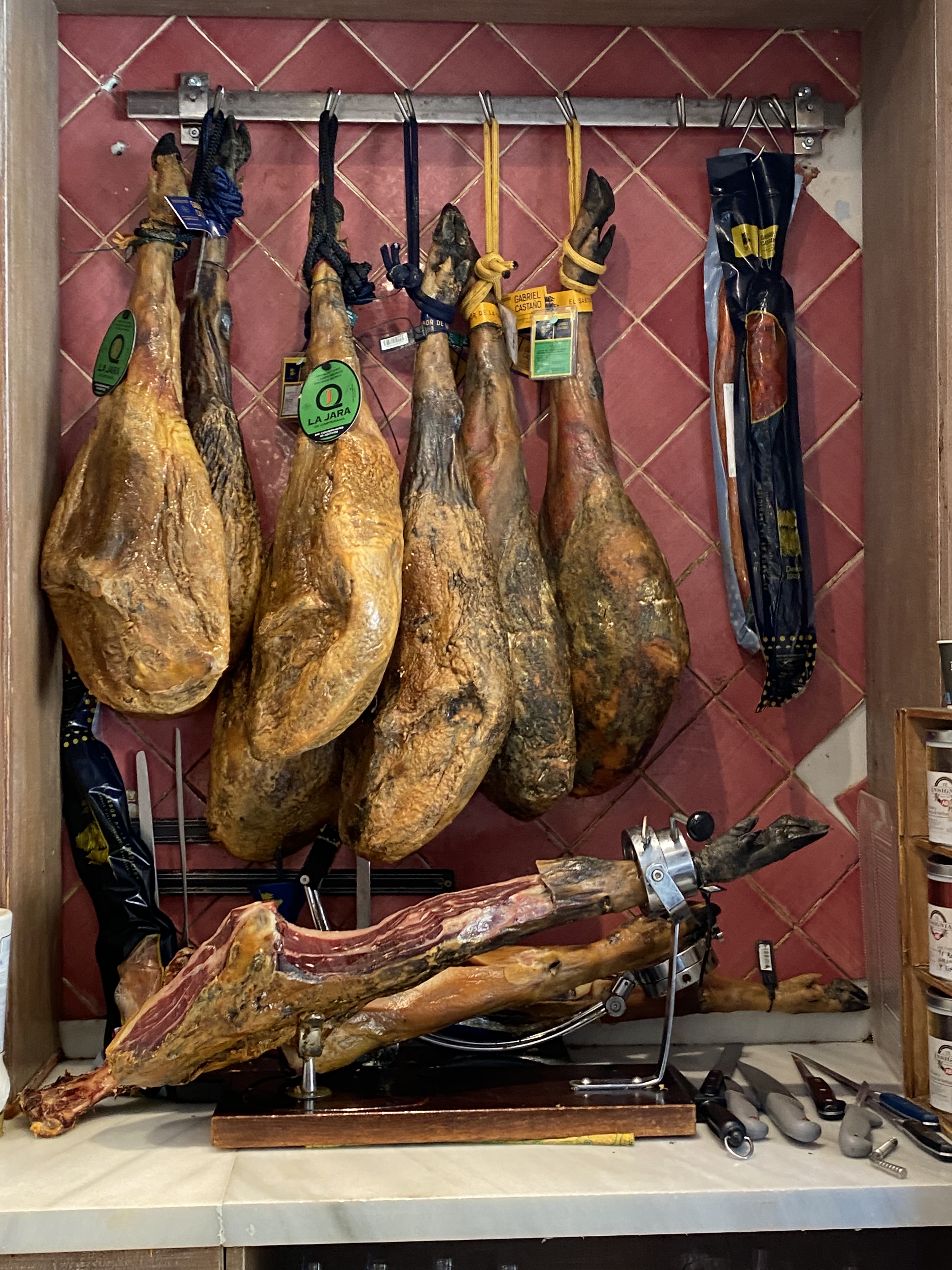

Spaniards have always been fond of ham and or pork meat. The Conquistadores’ diet in America heavily relied on the meat and on the fat of their dark scavenging pigs. These Spanish pigs brought over from Europe followed, or preceded the horses during the expeditions of Conquest. They could be readily slaughtered and cooked. American Natives had never seen those animals. To them, the animals looked like the aggressive non domesticated wild peccary (Javelina) which did not taste very well.
DIFFERENCE BETWEEN SPANISH-PORTUGUESE JAMON IBERICO, ITALIAN PROSCIUTTO, SOUTH TYROLEAN SPECK AND JAMON DE PATO (ALSO KNOWN AS PRESUNTO DE PATO)
Jamon Iberico is made from Iberian bred pigs. These pigs are usually free-range. They roam freely and eat acorns and forest food. They are raised like that especially in the southwestern regions of Spain and Portugal. Their ham is made by salting and air-drying their hind legs for up to three years. This process gives the ham a very distinctive and nutty flavor. Throughout Spain and Portugal Jamon Iberico is the ham of choice for appetizers, snacks and tapas. Most popular Italian Prosciutto hams made from Italian pigs are: Prosciutto di San Daniele and the Prosciutto di Parma. San Daniele Prosciutto is produced near Udine in the eastern North Italian region of Friuli Venezia Giulia. It is recognizable by its elongated shape and the pig’s hoof still attached to the end of the whole ham. Parma Prosciutto is produced in the northern central Italian region of Emilia-Romagna. It is ham that has a more rounded appearance. It has a shorter leg-handle which is usually covered by a golden aluminum foil with Parma Consorzio seal. It has no animal hoof attached. A few Prosciutto consumers say Parma Prosciutto is less salty that the Daniele Prosciutto. South Tyrolean Speck is also cured meat from the hind leg of a pig or wild boar. It is produced in the North Italian Autonomous Region of South Tyrol (Alto Adige). The meat is rubbed with salt, pepper, aromatic herbs, and berries. These include bay leaves and juniper berries. It is cold smoked for several weeks over beech wood. Jamon de Pato, also called Presunto de Pato in Portuguese, is produced from duck breasts. Ducks which are raised specifically for producing foie gras and duck hams. The breasts of these fattened ducks are rubbed with salt, sugar and spices, and air cured for several weeks. Air cured duck ham can be sliced thin and tastes like a very mild “prosciutto.” Sliced it can be wrapped in plastic or vacuum packed to last several months in the refrigerator.

TORRFISK, BACALHAU, BAKAILAOA, BACALAO OR COD
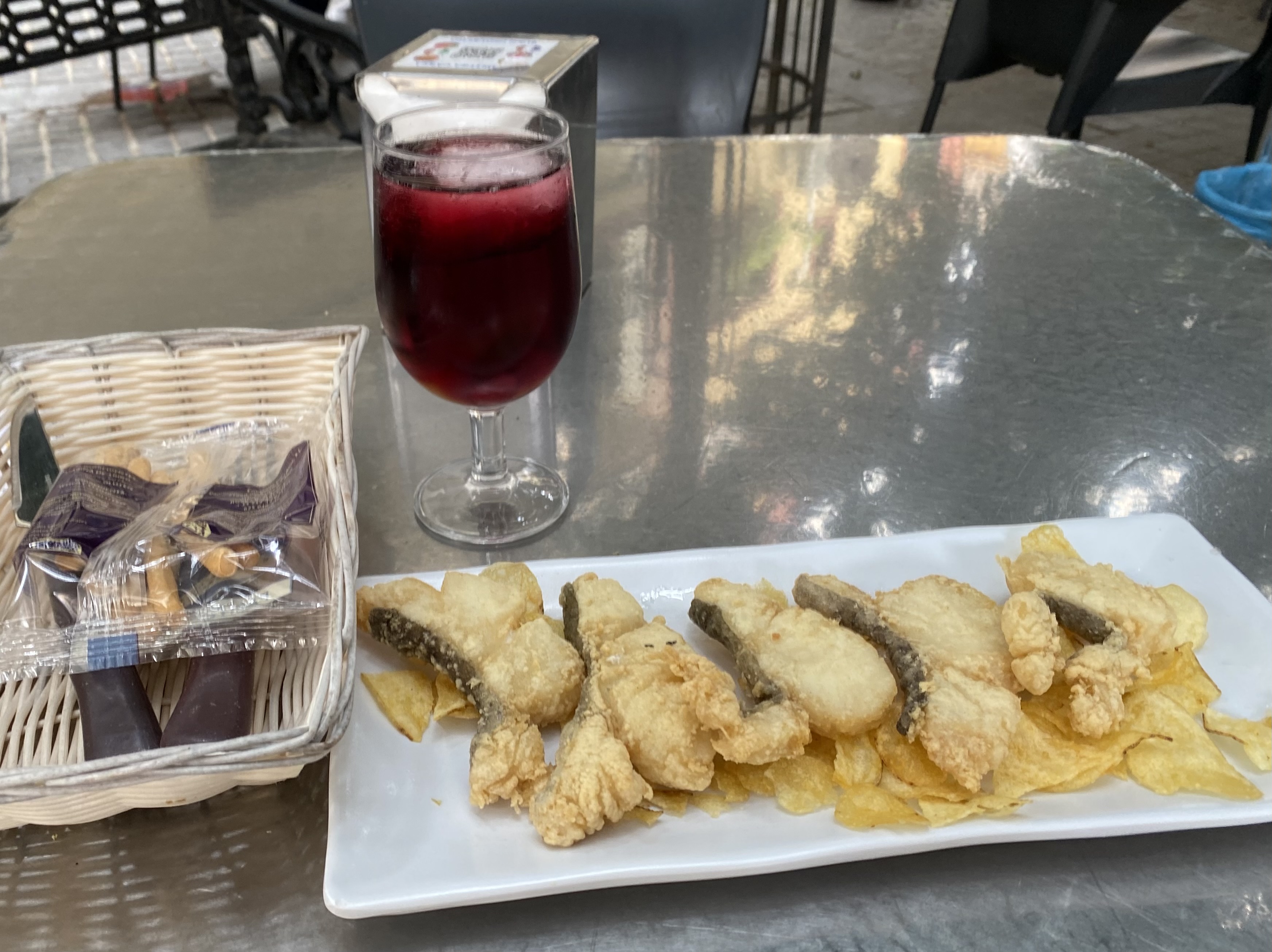
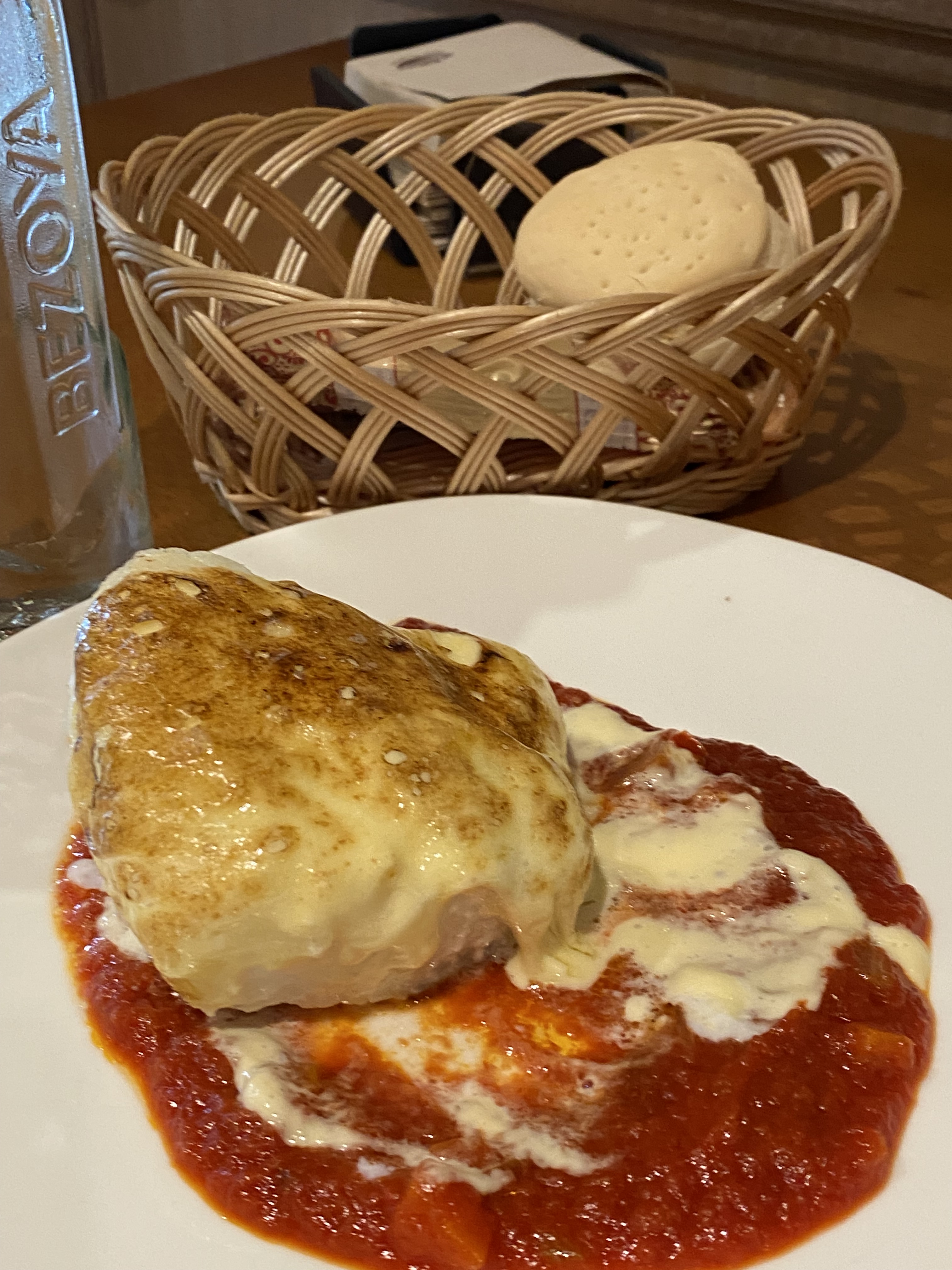
People of Seville saw the dried cod fish when the Vikings sacked the city in the mid 9th century. Salt-cod became a staple only later after courageous Basque and Portuguese fishermen followed the Norsemen as far as New Foundland. They caught their own Nordic fish and sold it along the coast of the Iberic peninsula . By 1558, fines in gold coins had to be paid by those fishermen and Spanish merchants who did not declare their loads of salted bacalao. Today bacalao frito, bacalao con tomates or bacalao gratinado are staple foods throughout Spain.
EL BARRIO DE TRIANA

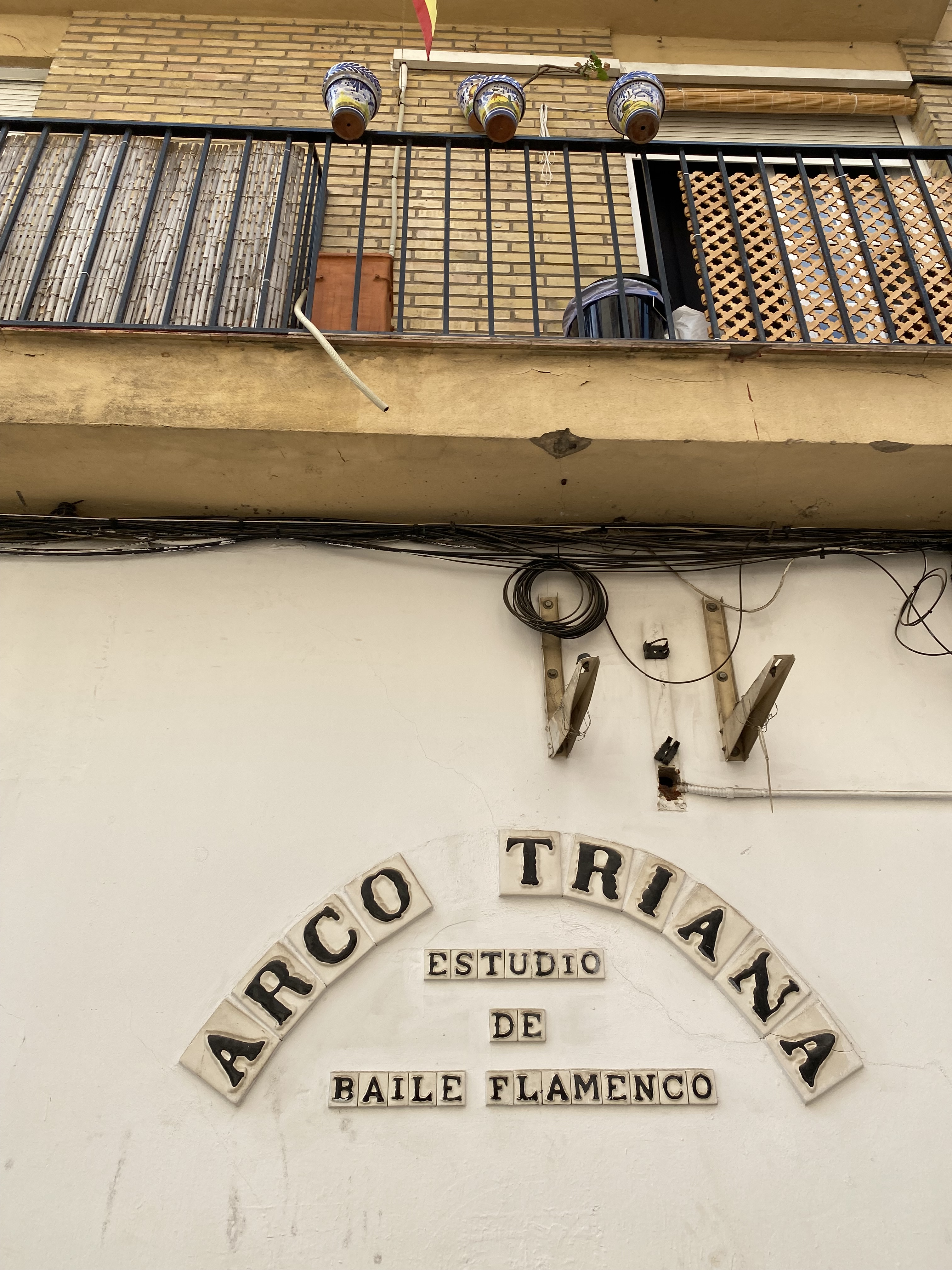
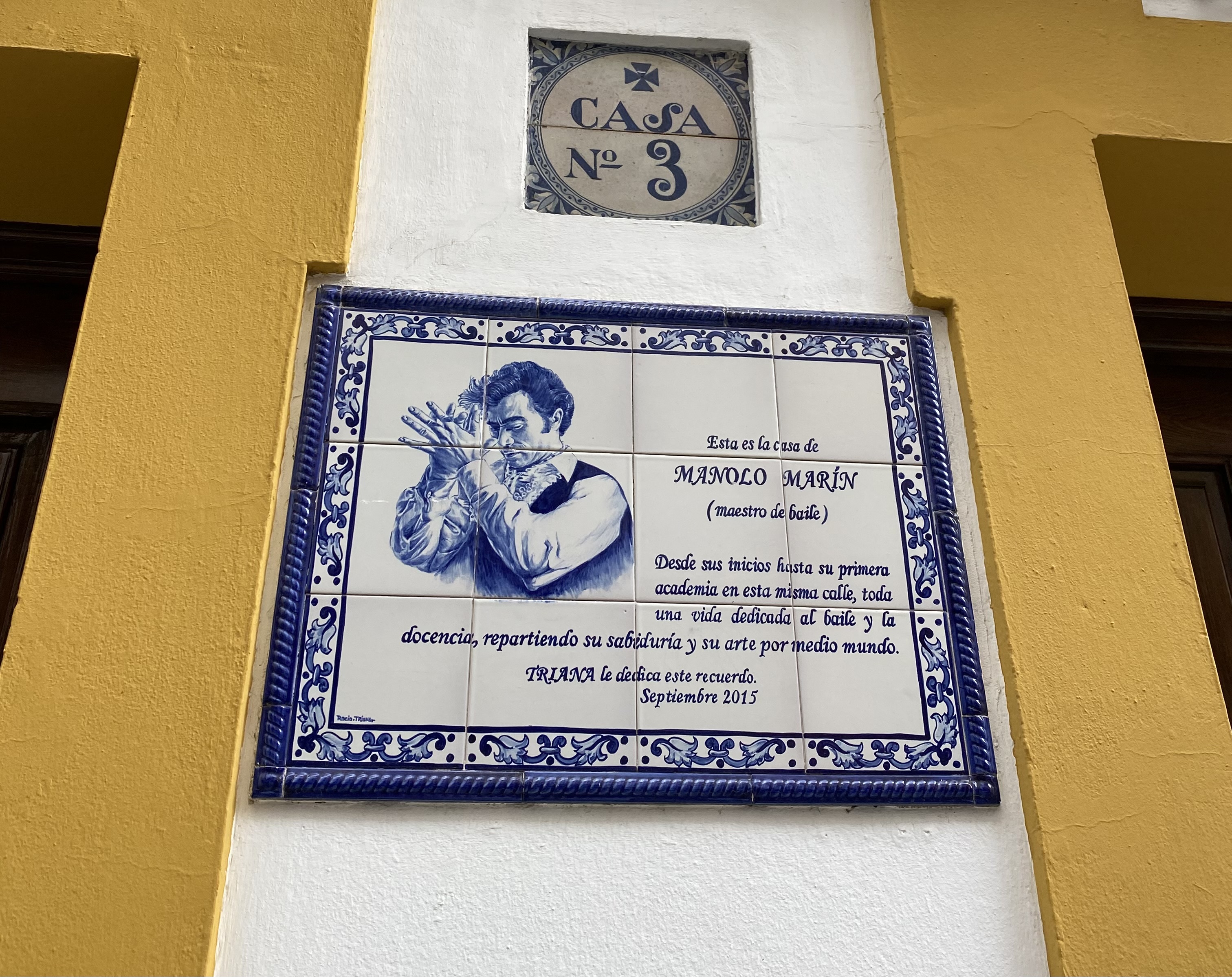
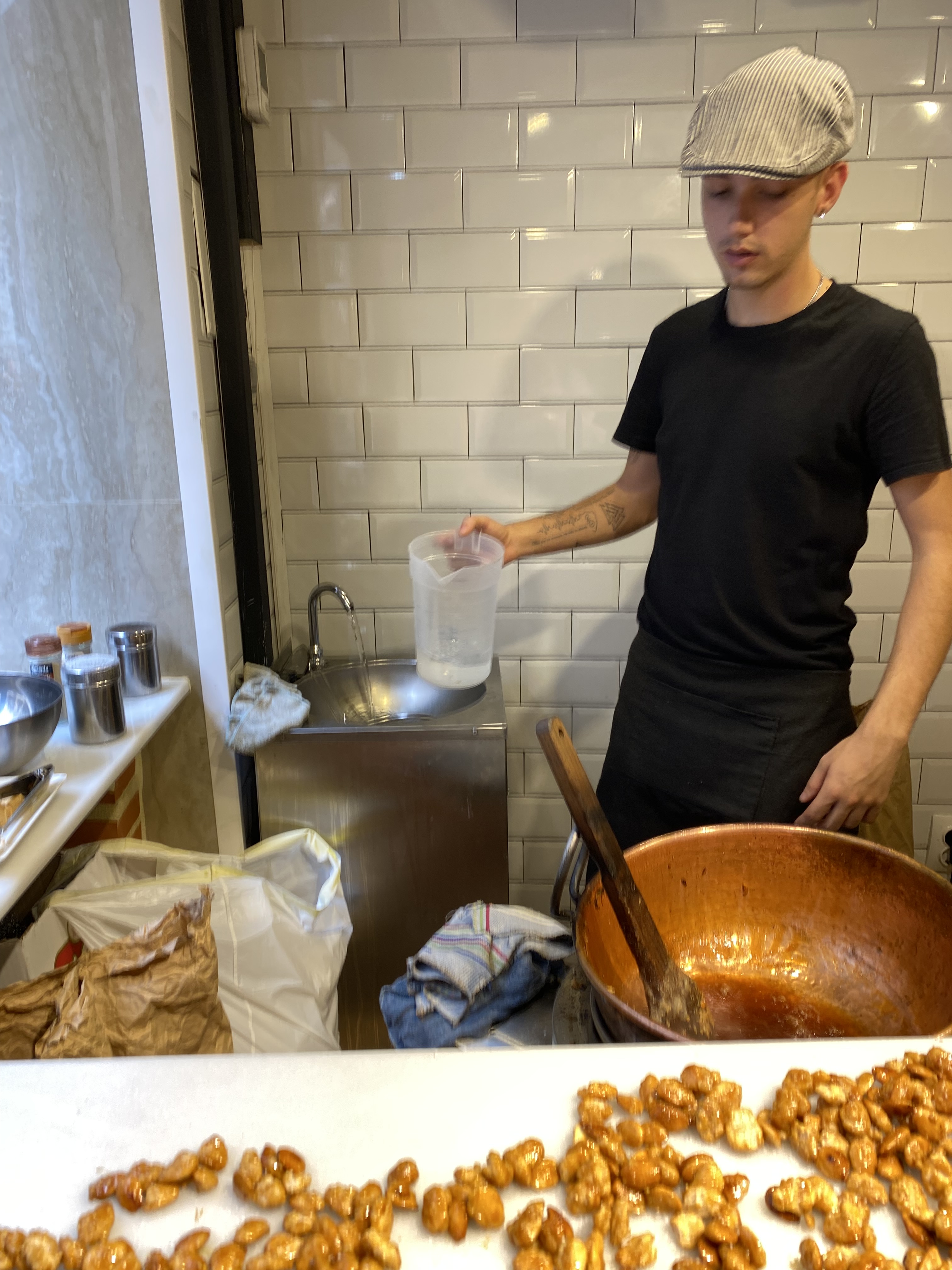
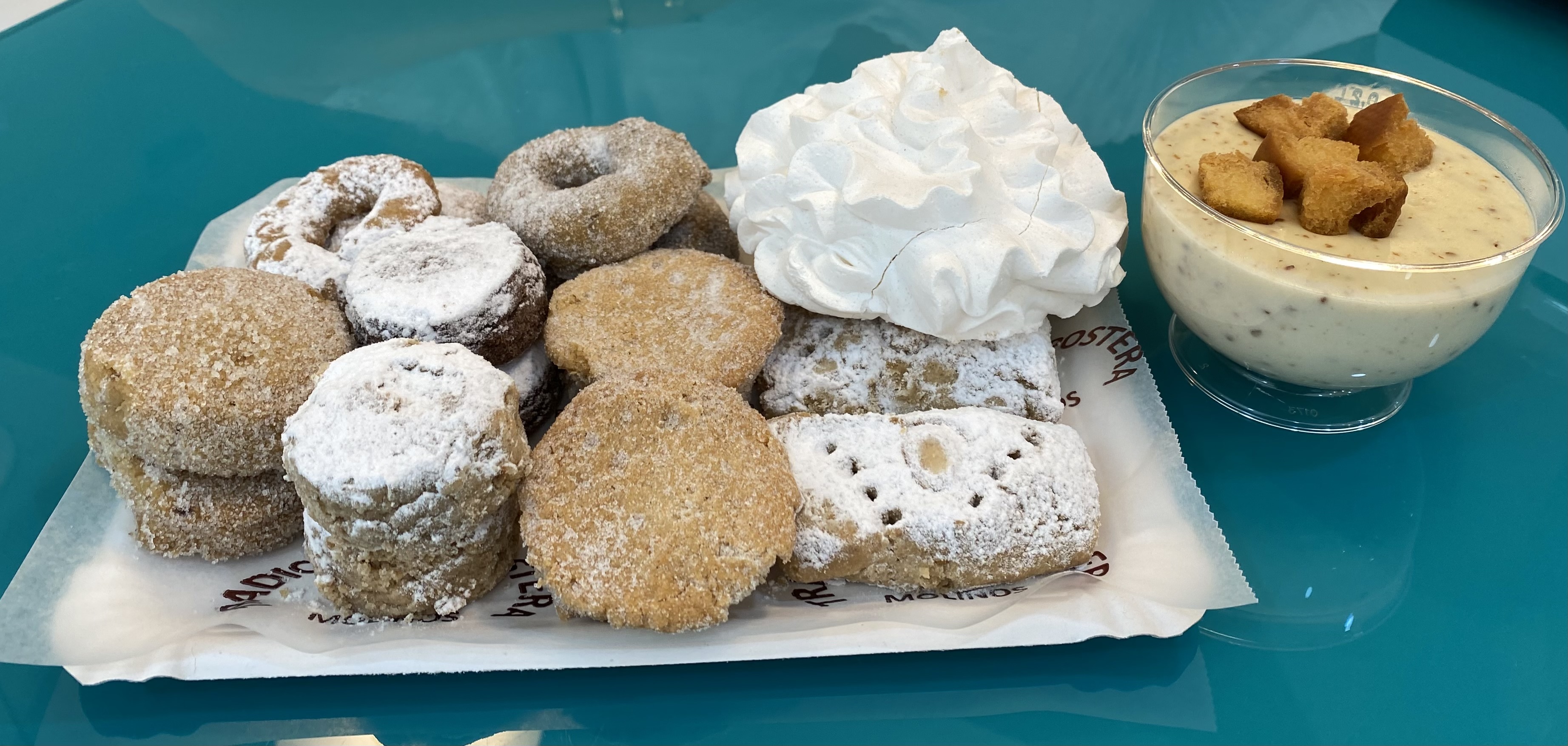
Exploring Seville’s Barrios can be fun. You can pass the tiled flamenco studio ads. Check out bars and ancient churches. Not too far from the big Cathedral, along calle Hernando Colon, you can sample caramelized almonds. But best experince for those with a sweet tooth will be at Rafael’s Reposteria Rustica Tradicional y Artesana MOLINOS. His clove flavored Tortera de Triana cookies are delicious; so are his small cinnamon sugar cupcakes. His postres include also Andalusian Polea pudding, also called Gacha Dulce.


HOW TO MAKE PASTRY CHEF RAFAEL’S POLEA PUDDING FOR THE DAY OF “LOS SANTOS” (1 November)
Serves 4
This pudding-like specialty was very popular among the poor. According to Pastry Chef Rafael, it gained popularity especially during the Spanish Civil War. It was eaten warm or tepid. Today’s young people like to eat it cold.
4 cups of milk, 3-4 Tbsp. of wheat flour, 3-4 tbsp. granulated sugar, 1/2 tsp. salt, 1 tsp. anise seeds, 1/2 cup olive oil, 1 lemon, 1 cinnamon stick, 1/4 cup anise liqueur, 1 roll of white bread.
Cube stale white bread. Boil the milk with a cinnamon stick and a peel of a fresh lemon. Set aside for 30 minutes. From the cooled off milk, remove the cinnamon stick and the lemon peel. In a skillet fry the bread cubes in olive oil with anise seed. When the cubes are golden brown, remove them from the skillet together with the anise seeds. Use the leftover anise flavored oil to brown the flour. Season with salt. Stir continuously while adding the cinnamon flavored milk and sugar. Before turning off the heat add the anise liqueur. Serve topped with the fried cubes of bread.
SEVILLA’S PAST
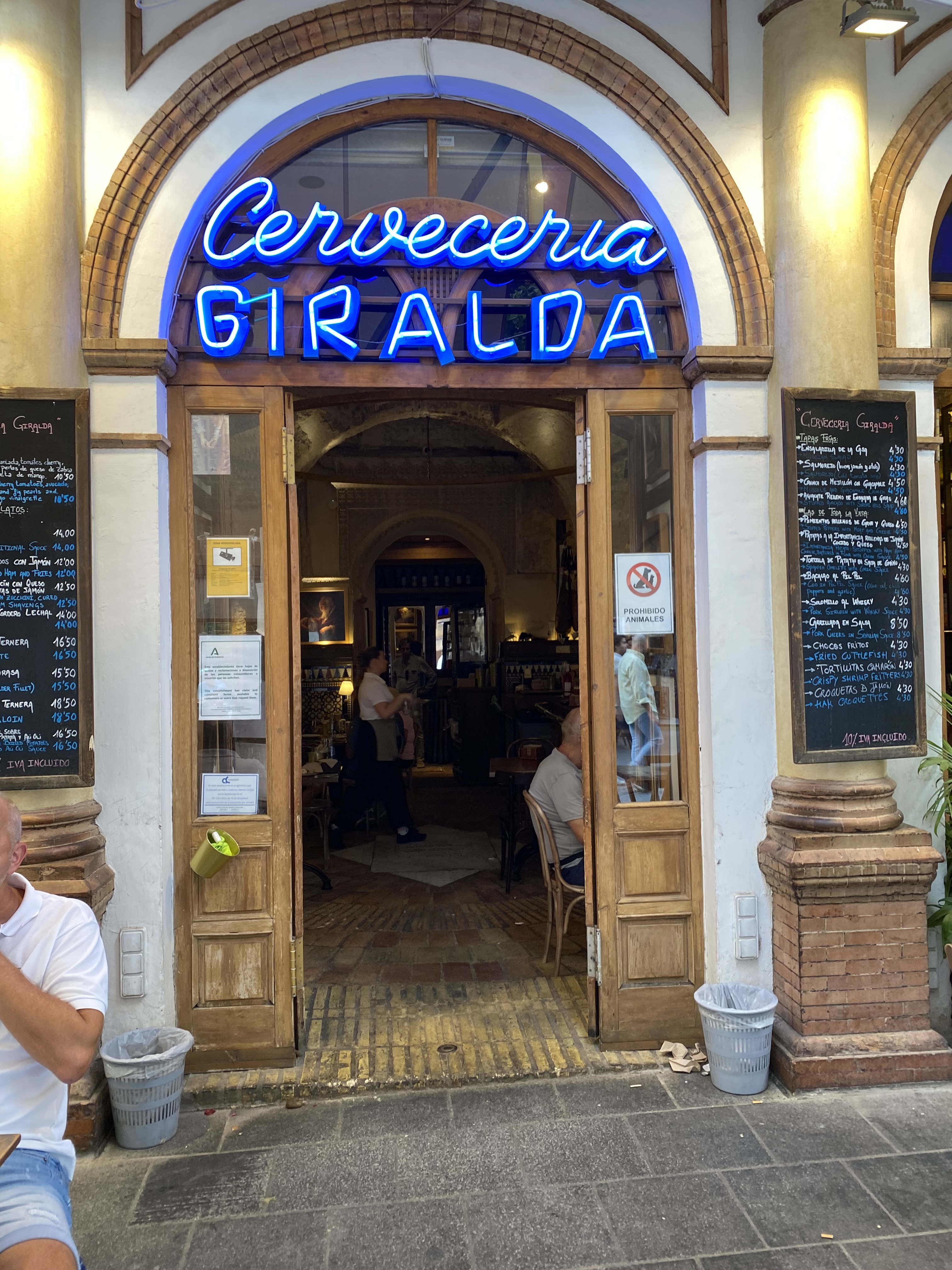
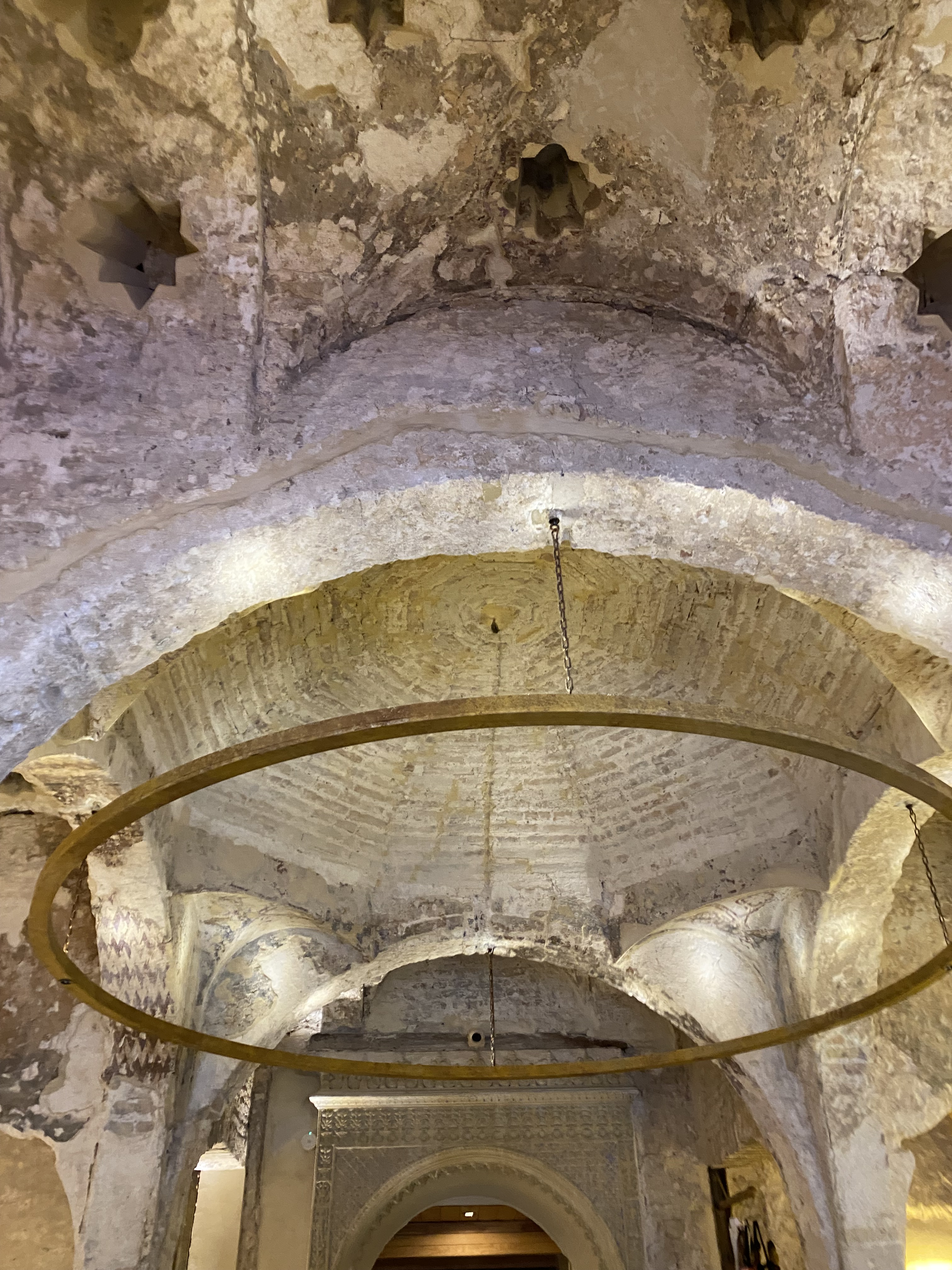
Seville is a city that has not shed all aspects of its past. A past that sometimes has been difficult. A past that has turned mosques and synagogues into churches. For those who wish to explore history or ancient family roots, there are still a few places to visit. There are bars and private buildings in town which still remind of Arabs and Jews living together. You can walk beyond the walls of the Casco Antiquo (Old Town). There a dark and narrow alley marks the entrance to the “Juderia”, the Jewish Quarters. If you are thirsty or are a historian, look for those old narrow bars. Some are still decorated with Moorish tile mosaics. Others have not torn down the wood door trimmings shaped in the form of the Star of David. Some larger bars, which once were mosques, still have the pavement with the gravestone of Muslim Caliphs.


WHERE TO STAY IN AGUADULCE AND SEVILLE:
HO Aguadulce, Paseo de los Robles 4, con Esquina Calle Nogal, Aguadulce (Almeria); Tel. +34 950 500 479 – reservasalmeria@grupolivencia.com. The high-rise place has large modern apartments with refrigerator-freezer, microwave and a conventional oven, washing machine and a dishwasher. Linen are changed once a week but dishes left in the sink will remain untouched. Closet for clothing very small. The location is great. 5 minutes away from the Ciringuito beach. It is also very near to the avenue where you can stop for coffee and for grocery shopping. It is not far from bus station to Almeria and from a taxi stand. Lovely view from the balcony if your apartment is up high. Considered the service for a solo traveler – a bit pricey. Recommendable for a couple or for a family (if the management cooperates).
HOTEL AGUADULCE.COM, Av. Carlos III, 348 04720, Aguadulce (Almeria); Tel. +34 950 349 003 – info@hotelaguadulce.com. The place is right near the popular breakfast and tapa places along the big avenue. 5 minutes away from the Ciringuito beach.
NATURAL SMART HOTEL ROOM007 SELECT TETUAN, Calle Jovellanos 8, 41004 Seville; Tel +34 955 96 4534; Whatsup: + 34 630 72 01 44 – tetuan@room007select.com – http://www.room007select.com. Centrally located and hardly reachable with taxi or car. Tiny rooms, moody hotel barista, but very near to BAR EL PICA (see below).
WHERE TO EAT AND DRINK IN AGUADULCE AND SEVILLE
CASA NOSTRA LAURA, Paseo Maritimo, Chringuito 2, 04720 Aguadulce (Almeria); Tel. + 34 644 764 087 – casanostralaura@gmail.com. The “cabana” is right at the beach. It is run by Michelle and a very friendly staff. The cook is Rufino who never outside his kitchen prepares great food including Paella. Ask Michelle if you need a straw covered umbrella and a beach lounge bench.
COMIDA ROMU, Calle Encinar 18, (Junto Parada de Taxis), Aguadulce (Almeria) – Lunes a Sabados de 10:30 a 15:30; Tel. + 34 616634762 – http://www.comidasromu.com. This Take Away place offers weekly and daily menus. It prepares typical Spanish food. Customers can enter the place, choose their meals, take them, pay, and go. Potaje de bacalao, Migas, Ensalada de Cuscus, Paella, and Bacalao con Tomate are some standard offerings. Ajoblanco and Arroz con Leche are also popular choices.
BAR EL PICA, Calle Moreno Lopez 3, Pasaje Sierpes a Cuna, 41010 Sevilla; Tel. +34 954 213 791 – While staying in Sevilla this has been my favorite bar. Located downtown, it opens early, even before the city’s elite strolls around in the fashionable stores. It’s a bar where beer is poured from a tap. Sandwiches are full of jamon iberico, sliced off the bone at the moment. The tapas include wonderfully delicious mussels in escapeche (with saffron olive oil vinegar dressing).
TABERNA LA PLAZUELA, Plaza de Santa Ana 1, 41010 Sevilla; Tel. +34 686 976293 – +34 954 723 079 – tabernalaplazuela@gmail.com. This place is located not far from the Hotel Las Casas de La Juderia. It has a friendly staff, great tapas, including Bacalao Frito (fried cod) and serves a good sangria.
BAR RESTAURANT DONAIRE AZABACHE, Calle Santo Tomas 11, 41004 Sevilla; Tel. +34 954 224702; donaireazabache.com. Has outdoor indoor and outdoor seating and a great bacalao gratinado.
CASA FUNES, Calle Mateos Gago 6, 41004 Sevilla; Tel. +34 955381651. If you are looking for special tapas to taste, Casa Funes is the place! Of course, you can enjoy Sangria. There are also interesting tapas, such as the ancient specialty: “Espinacas con garbanzo” (stewed spinach with garbanzo beans).
BAR AGUA Y VIDA, Calle Jon del Agua 8, 41010 Sevilla; Tel. + 34 6579472.This bar has tapas fairly expensive but not commonly prepared. Yes, it serves coffee, wine, coke, and sangria but offers Migas, a specialty that resembles Cous Cous but is not. It is in olive oil fried bread crumbs with red pepper stripes and pimento.
WHERE TO SCHEDULE AND INQUIRE ABOUT TOURS AROUND SEVILLE: IGNACIO FERNANDEZ OTERO, Calle Alemanes 31, Local A, 41004 Sevilla; Tel. + 34 647 176 471 – ignacio@colorofseville.com
WHERE TO BUY JAMON DE PATO IN SEVILLE: CENTRO COMERCIAL EL CORTE INGLES, Plaza de la Victoria 8, 41002 Sevilla; Tel. 900 353 353. Big department store associated to other 97 chain centers located throughout Spain and Portugal.
WHERE TO BUY AND TASTE DELICIOUS TRADITIONAL AND MODERN “POSTRES” CAKES AND COOKIES IN SEVILLA’S BARRIO DE TRIANA: TRADITION REPOSTERA MOLINOS, Calle Rodrigo de Triana, 63 Local, 41010 Sevilla; Tel. + 34 954 340 088 or +34 660180860 – http://www.reposteriamolinos.com – tradicionreposteramolinos@gmail.com
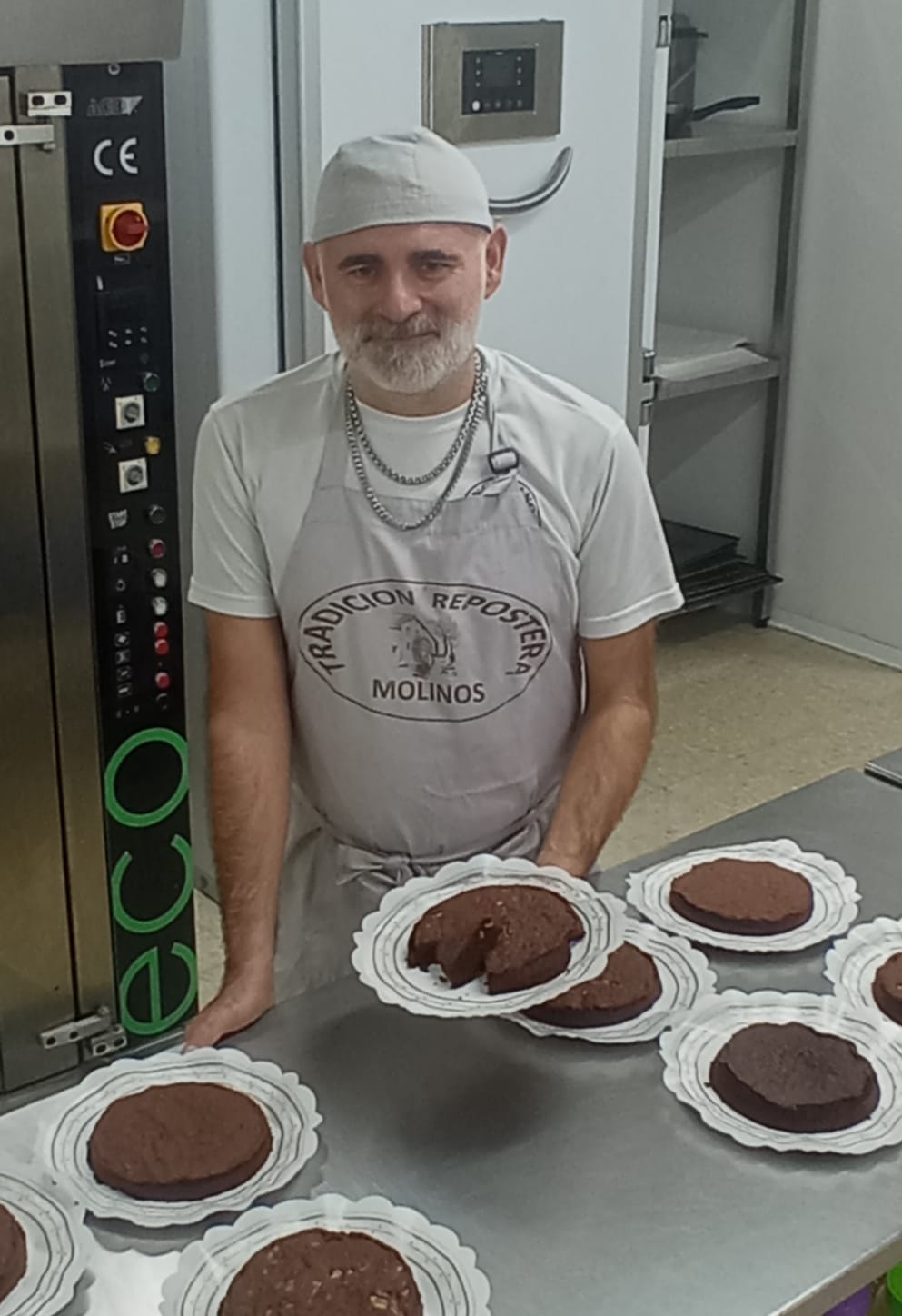
Barrio Triana, Sevilla, Spain
 CULINARY ROOTS & RECIPES™